
Sunday, September 24, 2006
Five Corners
Five Corners was a straggling village in the western part of Allen Township, so named on account of its location at the intersection of several roads, and at one time achieved considerable reputation as a trading point. The place was never platted, being merely a thickly settled locality to which the term village can scarcely be applied, but it early on became the chief source of supplies for a large area of territory in Miami and Fulton Counties. About the year 1857, or perhaps earlier, a stock of goods was brought to the place by Moses & Williams, who carried on a very successful business for a period of six or seven years. The business went through a few more owners when L. Carl began merchandising, and continued with fair success for over a year, when he moved his stock of goods to Macy, his store being the last business venture at the Corners. A postoffice was established in 1859, with Nathaniel Bryant as postmaster. The last postmaster was L. Carl, who had charge of the office when it was moved to Macy. The only remnants of the village is Five Corners Cemetery., where lie many of the first settlers of the county.


Saturday, September 23, 2006



Thursday, September 21, 2006
Killed by a Locomotive
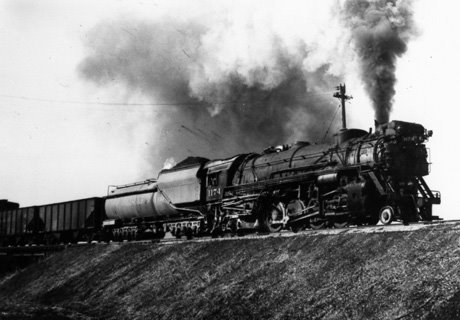
1885--John Daily, a laborer for some years on the Joseph Hiner farm, north-east of the city, was struck by the switch engine not far from the crossing of the two roads and fatally injured. It seems he had been to Peru and started home, carrying a sufficient amount of intoxicating liquor to make him sleepy, and had sat down on a tie to rest. The whistle of the locomotive failed to arouse him from the stupor, and the engineer discovering the danger reversed his engine too late to avoid striking the unfortunate man with the pilot beam. Some of his ribs were crushed in and death ensued before he reached the county infirmary to which he was carried. Sunday his remains were buried in the Tillett graveyard.
Only one of the quartette that used to walk to town with Joseph Tillett is now living. The other three were killed on the railroad not far from the same spot where Daily was struck.
Tuesday, September 19, 2006
The Bagging Factory

1890--The owners of the Peru Bagging Mill which has been lying idle for two years, have announced their intention of starting up at once, and have already ordered the material. When this arrives, and it is now on the way, the gas will be turned on in the boilers of the big mill, and 100 hands will be set to work. This is a big boom for Flax Hill, which had become the deadest part of the town. Peru is walking right out of the reach of her neighbors and nothing can hold her down. She has taken the tide that leads on to fortune. During the last three weeks we have located the Peru Twine Cordage Factory, employing 100 hands, the Eel River shops, employing 500 or 600 men, The Bagging Mill, which is, as far as its effects are concerned, a new factory, employing 100 hands, while the assurance has been given that 5,000 acres of the city will soon be opened to the culture of celery.
Is it true--there is more than corn in Indiana? CELERY
Wonder if they were going to plant it in the black muck in Oakdale?
Monday, September 18, 2006
Toll Gate
1885--One night Dr. Pence drove home from Bunker Hill over the Strawtown turnpike. He had seen it stated in the newspapers that the county had bought the turnpike and supposed the transfer had already been made. The night was exceedingly dark and the doctor jogged along without accident or incident, to mar his meditations until his horse stopped in front of the toll gate this side of Cole's Brewery. Thinking the horse had merely stopped from force of habit, he applied the whip to urge him on when the animal, after trying to jump over the pole across the road suddenly squatted and ran under it. The first warning the doctor had of his danger, the pole struck him amid ships and knocked him back on his beams end and the top of his buggy was raked off as the horse pulled it under the horizontal pole. Only those who are acquainted with the doctor can form the faintest idea of the horrid imprecations that rolled from his lips for the next half hour.
Wander how the drivers of today would like to pay a toll for using Strawtown Pike--golfers would have some" horrid imprecations roll from their lips."
Wander how the drivers of today would like to pay a toll for using Strawtown Pike--golfers would have some" horrid imprecations roll from their lips."
Friday, September 15, 2006
KISSES

1903-An Indiana judge has decided that a wife may kiss whoever she pleases and as often as she likes without violating her marriage vows. Kisses, the judge says, are a wife's personal property and may be distributed to her friends regardless of race, color, sex of previous condition of servitude. Fortunately this kind of personal property is exempt from taxation.
I wonder if this law is still in effect?
Wednesday, September 13, 2006
Borrow a Horse

1885--Jacob Hahn, of Butler, came to town and notified the sheriff that one of his horses had been stolen the night before. He telephoned the fact to all the adjoining towns and had bills printed and distributed offering a reward for the arrest of the thief. The same day the sheriff of Wabash telephoned to Peru that the horse was found in that city in the possession of Jim Brown and Frank Kelly. The facts since learned are that Frank Kelly, who is a minor, wanted to marry a sister of Brown's wife, who is a Miami squaw. Kelly's father notified the clerk of the court of this county that his son was a minor and forbid his issuiing license to him to marry the dusky maiden. It seems Brown and young Kelly borrowed Hahn's horse and a neighbor's buggy and drove to Wabash and procured a marriage license for Kelly, who at once skipped the town and left the horse and buggy in charge of his partner. Brown was held subject to the orders from the sheriff of Miami county. Jake Hahn got his horse, Kelly got his bride and Brown went to jail.
Saturday, September 09, 2006




Thursday, September 07, 2006
More on "Peg Leg" Helmig
While doing geneology research, I kept finding articles about "Peg Leg" Helmig. He was arrested several times for fighting and intoxication.
My grandmother's mother was a Helmig. I asked my grandma several times just who was this "Peg Leg". Her response was always "I don't know." My grandma was very young when "Peg Leg" was shot. Years ago the families did not talk about "black sheep" within their families. Very few Helmigs lived in Peru and I was sure there was some connection. When I found the article about John Henry's death the pieces of the puzzle fit together. John Henry Helmig was my great-grandmothers brother.When I told my grandma the events of the story she said,"you can't put that in the book". My mother said the same thing. I told them "It's part of the history of our family-good or bad".
He was portrayed in the newspaper as a worthless character always in trouble. Who knows what gave him the attitude he had-- Maybe losing his leg at the age ten--or alcohol could have been a contributing factor. It is very sad that he was only twenty-eight when he he met his fate from five bullets at an East eighth street saloon.
My grandmother's mother was a Helmig. I asked my grandma several times just who was this "Peg Leg". Her response was always "I don't know." My grandma was very young when "Peg Leg" was shot. Years ago the families did not talk about "black sheep" within their families. Very few Helmigs lived in Peru and I was sure there was some connection. When I found the article about John Henry's death the pieces of the puzzle fit together. John Henry Helmig was my great-grandmothers brother.When I told my grandma the events of the story she said,"you can't put that in the book". My mother said the same thing. I told them "It's part of the history of our family-good or bad".
He was portrayed in the newspaper as a worthless character always in trouble. Who knows what gave him the attitude he had-- Maybe losing his leg at the age ten--or alcohol could have been a contributing factor. It is very sad that he was only twenty-eight when he he met his fate from five bullets at an East eighth street saloon.
Tuesday, September 05, 2006
John Henry Helmig Shot
Jan. 12, 1902--John H. Helmig, who was in a partially intoxicated condition was in the saloon owned by Charles Neathery across the track from the depot on East Eighth Street. Helmig asked for a drink and his request was granted. He asked for another drink and upon being refused opened the beer faucet and let the liquor run onto the floor. He was then ejected from the saloon and this made him violent. He broke the back door glass with a cane, and walking around to the front of the building, commenced breaking the front door glass with the same instrument, demanding admittance. After Helmig had again walked back to the saloon front Neathery pulled a revolver and shot Helmig five times killing him instantly. He then went to the officers and surrendered himself.
J.H.Helmig had fallen under a freight train on which he was riding when he was about 10 years old. His left leg was cut off above the knee and had become known as "Peg Leg" Helmig. He would go on occasional sprees at which time he would grow sullen and vicious. His name appeared on court records a number of times. His attitude caused his death at an early age of twenty-seven. This story was of great interest to me-will explain more tomorrow---
J.H.Helmig had fallen under a freight train on which he was riding when he was about 10 years old. His left leg was cut off above the knee and had become known as "Peg Leg" Helmig. He would go on occasional sprees at which time he would grow sullen and vicious. His name appeared on court records a number of times. His attitude caused his death at an early age of twenty-seven. This story was of great interest to me-will explain more tomorrow---
Erie Township
Erie Twp. is the smallest township in the county. The first white man who trod her dense forests was Samuel McClure. He came in the fall of 1827, and established an Indian trading post on Abraham Dingman farm. His business was that of trader exclusively and consequently he made no attempt at improvements at any time. So far as can be ascertained no white man entered the township for the purpose of bringing the forests into a state of cultivation until 1835. In that year quite a number, being encouraged by the flattering prospects which were offered by the opening of the Wabash and Erie Canal, entered the township, purchasing land immediately adjoining thereto and known as "Canal Land."
My Grandpa had a farm in Erie Twp. when my mother was quite small. Very few remnants of the farm exist today but after some exploration I was amazed at how much wilderness still exists in certain areas of Erie Twp. My mother went to Erie Consolidated school and had to walk quite a distance to get to the unheated school bus to catch her ride. She told me that certain times of the year she had to be carried across a creek when the water was high so she could get to school. The kids of today would moan if they had to walk that far just to go to school.
My Grandpa had a farm in Erie Twp. when my mother was quite small. Very few remnants of the farm exist today but after some exploration I was amazed at how much wilderness still exists in certain areas of Erie Twp. My mother went to Erie Consolidated school and had to walk quite a distance to get to the unheated school bus to catch her ride. She told me that certain times of the year she had to be carried across a creek when the water was high so she could get to school. The kids of today would moan if they had to walk that far just to go to school.
Friday, September 01, 2006
Schools of Erie Twp., Miami County

There were five schools in Erie Twp. until 1917, at which time the consolidated school was built. Log schools were built, replaced with frame buildings, then brick buildings. The five schools were: Cattin, Marken, California, Long Island, and Pikes Peak.
There were four classrooms in the consolidated school at Erie. The school has a full basement divided into two restrooms, a domestic science room, and a manual training room.
The Cattin school was the first school house made of bricks. Ulysses Cattin donated one-half acre for the school. The first schoolhouse, built on the Cattin farm in 1850, was of hewn-logs. The next schoolhouse built of brick was one-half mile to the northwest of the log cabin schoolhouse. It was built somewhere between 1878 and 1887. The schoolroom was heated with a large round stove. They secured water from an old wooden pump. After many years of use it was broken- so the children had to carry water from a nearby house. The teachers of the first schools were only paid $25. a year. Some of that paid in coonskins and grain. They had to carry the wood, build fires, and do the sweeping. Much different from today wouldn't you say?
Wednesday, August 30, 2006
Osage Village

The most important village of this county was Osage, on the bank of the Mississinewa, one mile above its mouth, but two miles above Peru. This was doubtless, the largest Miami village belonging to the tribe. It took its name from that of Osage, its first chief. It was a beautiful sight for a village, but is now a vast cornfield. She-pa-can-nah, or Deaf Man, was a war chief of this village. He married Francis Slocum, the Indian captive, and established, what was called Deaf Man's Village, further up the river, on the edge of Wabash county. There were also other small villages at different points.
Tuesday, August 29, 2006
Pointers given to Painters

Olaf Hemdal, manager of the Peru Lumber Company entertained twenty painters at Smithy's Playhouse on North Wayne Street. The Jewell Paint and Varnish Co. of Chicago, cooperated with Mr. Hemdal in providing a representative who discussed salesmanship of painting and decorating. The painters were treated to a dutch lunch which was well received. It was predicted in the meeting that there will be much painting and decorating of homes in the spring of 1935. The prospects for a successful season are very good.
Monday, August 28, 2006
Hanging in Peru
1887--While Dr. E. B. North was the physician at the first Railroad Hospital, he heard a shot fired in a barn close by. Dr. North entered the barn to give the "victim" any aid he could and for his kindness he was fired on and fatally injured. James Christianson was immediately arrested and placed in jail under the old brick court house. The shooting of Dr. North, who was very popular in this community created an intenseley bitter feeling against Christianson and revenge was the result. A mob was formed on East 5th Street. The mob had sledge-hammers with which the door of Christianson's cell was broken. After placing a rope around the neck of the prisoner the men pulled him up stairs to the first floor and after getting out to Broadway the mob ran south toward the bridge over the Wabash River. He was dragged part of the way to the bridge. A rope was placed over a beam at the top. The victim begging for mercy was drawn upward. His hands were not tied so he held on. Then he was let down again, and after his hands were tied, he was pulled up. When he was declared dead his body was lowered. Dr. North died the next day and the man who fired the shot that killed him paid the penalty.
Friday, August 25, 2006
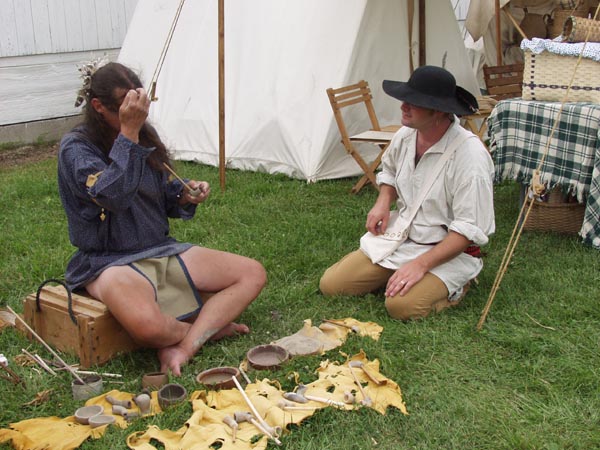

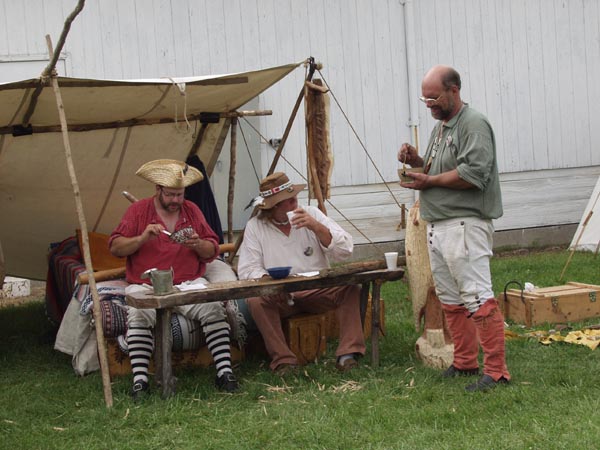
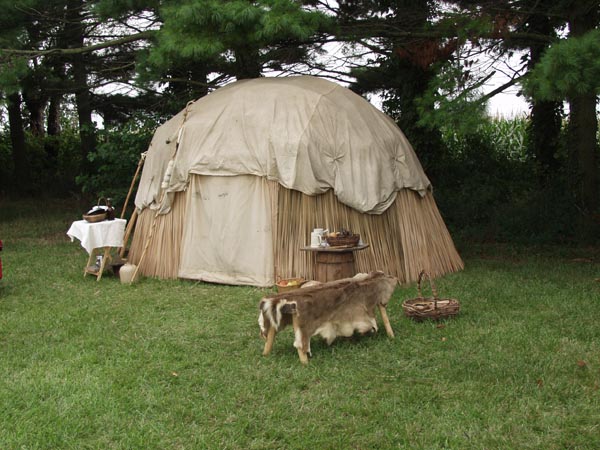

Heritage Days 2006-Circus Hall of Fame
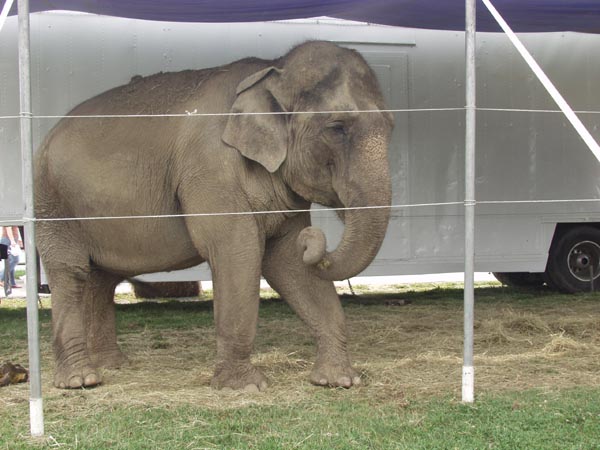
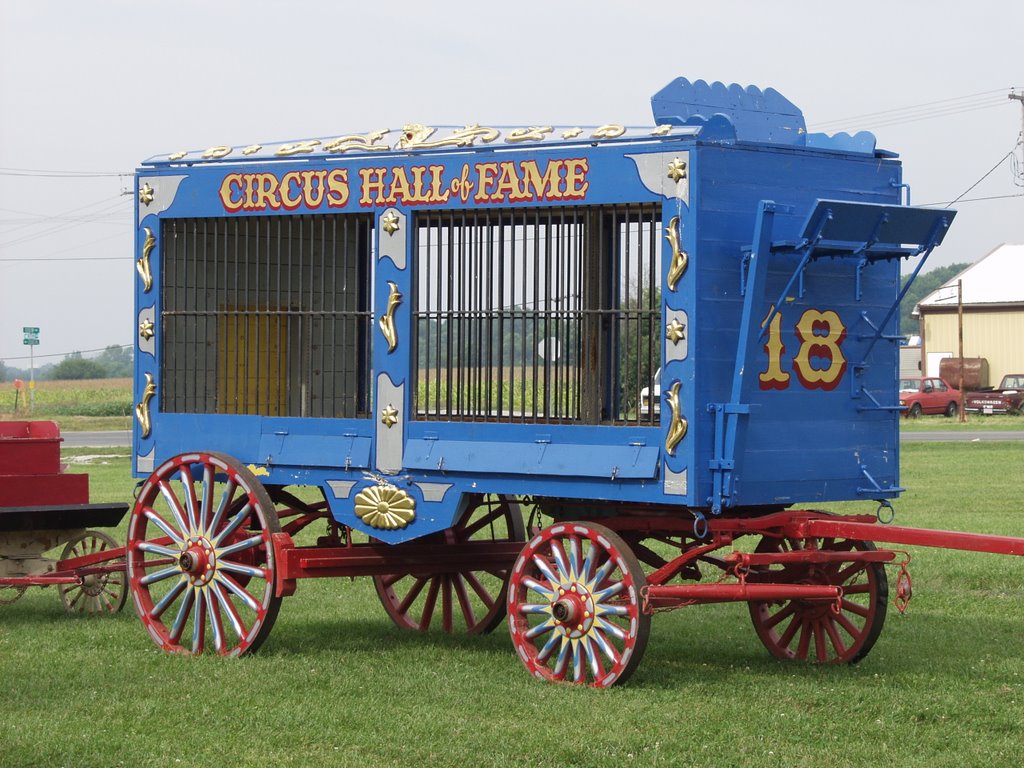
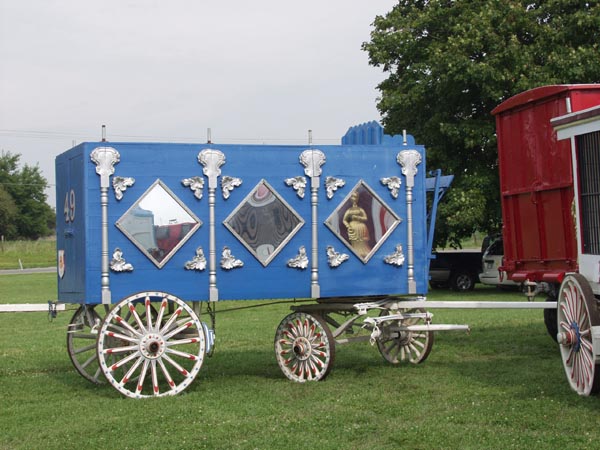
The Circus Hall of Fame is well represented with their caravan of circus wagons. The children will enjoy the three elephants from the Hall of Fame. The elephants will have their baths tomorrow thanks to the fire department.

Wednesday, August 23, 2006
Railway Hospital in Peru

Sept. 4th, 1885--The new railway hospital, 40 rods north of the railroad shops is a comparatively new residence, modern in style. It was built by the late Joseph Karthol, who traded it to Samuel W. Ream, of whom the railroad company bought it. The grounds comprise two acres. The house, originally square, has been considerably enlarged. The second floor is to be used as a living room for the Sisters of Charity. The dining room has table accommodations for twenty-four persons. Both kitchen and dining room are supplied with hot and cold water.
The new hospital was opened Tuesday. Dr. E. B. North, of a Missouri Pacific hospital is the surgeon in charge. F.S. Arnold, is superintendent. The hospital is one of which all may be proud.
Subscribe to:
Posts (Atom)